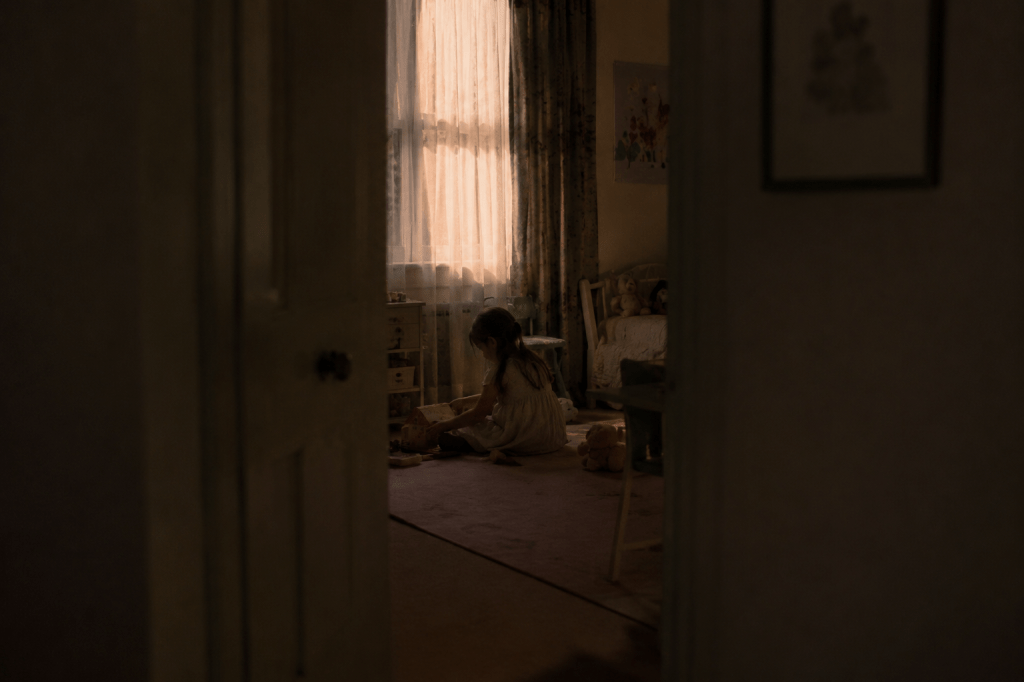
Adults love unusually well-behaved little girls.
The quiet ones. The mature ones. The children who never create too much trouble for anyone around them.
I was one of those children.
I was considered smart early because I learned to read quickly, loved numbers and geometric shapes, and spent most of my time indoors. I had quiet hobbies. I dressed dolls, organized imaginary fashion shows, reread books, and repeated the same comforting activities over and over again. I was not rebellious, loud, or particularly difficult. Adults described me as mature for my age, emotionally intelligent, independent, and low maintenance.
At the time, those labels felt like compliments.
Now, as an adult woman, I think they were also warning signs.
I do not think children are supposed to be that well-behaved.
Not because children should be cruel or impossible, but because childhood is supposed to contain chaos. Curiosity. Experimentation. Mistakes. Noise. Children are supposed to test boundaries and survive embarrassment without feeling like the world is ending.
I was not like that.
If an adult corrected me too harshly, even politely, I would carry the shame for days. Something as small as being lightly scolded could emotionally and even physically hurt me. Looking back, I do not think I was simply “sensitive”. I think I became deeply afraid of disappointing people.
And maybe that happens to many children who are praised too early for taking up as little space as possible.
The complicated thing about being considered mature as a child is that adults begin treating you emotionally differently. They trust you with things children should not always have to carry.
My parents were divorced, and although I know now that they were simply hurting people trying their best, there are conversations I should never have been part of. Sometimes adults forget that emotionally intelligent children are still children.
I remember my biological father speaking to me about my mother as if I were an adult friend instead of a nine-year-old girl. He would tell me she was the love of his life, that she had ruined him by leaving, that her new life after divorce was somehow a betrayal. At that age, I could not fully understand manipulation, resentment, or emotional projection. I only understood that the adults around me were in pain, and somehow I felt responsible for absorbing it quietly.
I think many well-behaved little girls learn early that being easy to handle makes life more stable for everyone else.
So they adapt.
They become emotionally hyperaware. They apologize too much. They overexplain. They avoid conflict because conflict feels physically painful. They become excellent at anticipating disappointment before it happens.
And eventually, people stop asking whether they are overwhelmed because they seem so capable all the time.
The strange part is that life often rewards this adaptation.
You become dependable. Organized. Emotionally intelligent. Easy to work with. Easy to trust.
But underneath all of that competence, there is sometimes grief.
Not because your life was necessarily unhappy, but because you begin wondering who you might have become if your first instinct had not been emotional self-regulation.
My childhood was not miserable. In many ways, it was loving. But sometimes I look back and realize it lacked freedom. It was happy, but maybe a little too careful. A little too quiet.
Things changed when my mother remarried.
I do not call him my stepfather because, emotionally, he never felt like one. He is simply my dad.
If my mother taught me resilience, my dad taught me joy.
My mother survived things that would have broken many people. She worked hard, endured judgment, rebuilt her life after divorce, and remained fiercely devoted to the people she loved. Watching her navigate a world that punished women for refusing to stay unhappy shaped me deeply. She taught me strength.
But my dad taught me something equally important: whimsy.
He is the kind of person who loves everyone loudly. The kind of person who helps strangers, feeds animals, laughs easily, and genuinely enjoys life. When I was twelve, we stayed awake all night together making a banner for a concert contest. While everyone else made ordinary signs, he insisted we should create something different, something fun. We made a banner shaped like a T-shirt.
We won.
But more importantly, for the first time, standing out felt joyful instead of dangerous.
As an adult, I still see traces of that overly mature little girl in myself.
I apologize too much because I need people to understand that my remorse is genuine. I avoid conflict even when confrontation would probably help me more. I overexplain my feelings and decisions because I am terrified of being misunderstood. I spent years tolerating situations that deserved firmer boundaries simply because I was more comfortable adapting than disrupting.
Even in friendships, I naturally become the support system before allowing myself to become the person needing support.
Only recently have I started understanding that taking up space does not make me difficult.
I am allowed to need people too.
I think many women who were “mature for their age” become women who tolerate too much. In relationships. In workplaces. In friendships. We become experts at understanding others while struggling to justify our own discomfort.
For a long time, I confused tolerance with goodness.
Now I think womanhood is more nuanced than that.
I deeply admire strong, ambitious, intimidating women who completely reject society’s expectations. But I also know that I am not naturally hard or ruthless, and I no longer want to force myself into becoming someone emotionally disconnected just to survive adulthood successfully.
Sometimes tolerating does not mean being weak. Sometimes softness is not passivity. Sometimes growth simply means learning the difference between kindness and self-erasure.
Healing, for me, no longer means becoming a completely different person.
It means becoming slightly better every day without becoming cruel toward the versions of myself that survived differently.
I do not want to lose my sensitivity. I just want it to stop hurting me.
And maybe that is the strange grief of becoming a smart woman early: mourning the woman you could have been if things had been different, while still learning to love the woman you became because of them.
 Pink Collar Thoughts
Leave a comment